
Maison de l’autisme launches first in video series
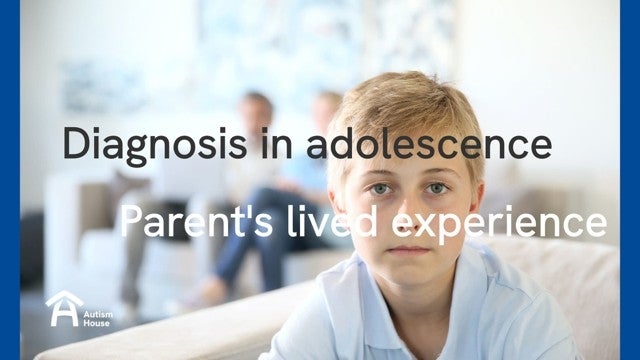
For teenagers receiving an autism diagnosis and the families supporting them, finding clear, actionable and empathetic guidance is often a daunting challenge. To bridge
this gap, a new series of video capsules, “Parenting an Autistic Adolescent,” is offering vital resources designed specifically to foster mutual understanding between neurodivergent youth and their support networks.
Initiated by Maison de l’autisme and supported by a grant from the Toronto-based organization Unity for Autism, the project was spearheaded by a dedicated committee
and produced by the organization’s very own Danny Goyette, who is on its board of directors. Driven by the core philosophy of being created “by and for” the community,
the project captures both the parental outlook and the autistic individual’s lived experience and illuminates the nuances of daily life that are frequently misunderstood.
“It really reflects the parents’ perspective... and then we also talk about the autistic perspective, which is often quite the opposite,” explained Goyette, who first joined the
Maison de l’autisme as a participant in the support group, and later became coordinator and producer of multimedia content for the website. “That’s one of the main goals:
to make sure both sides can see how the other reacts ... so they really understand the stress they are going through and try to figure out tips and strategies to help.”
For Goyette, who received his diagnosis later in life, framing these concepts with clarity is deeply personal. The project team gathered insights through community
surveys and direct interviews conducted by committee member Emma Blanda. These discussions highlighted the unique hurdles faced by youth who navigate school for
years without a diagnosis, and the disconnect that occurs when support fails to adapt post-diagnosis. “Teenagers get diagnosed late; they go to school the next day, and
nothing changes,” Blanda said. “The school thinks, ‘You don’t need anything because you were here yesterday; there haven’t been any challenges.’”
The first three video capsules released are about food, personal hygiene and parental experiences. Upcoming instalments plan to dive deeper into complex mental states,
crisis management and lesser-known experiences such as the interplay between anxiety and inertia.
For Blanda, whose daughter was diagnosed at age three, the project highlights the irreplaceable value of having autistic adults co-leading the initiative. “I can go to a meeting and say, ‘This is what happened today,’ and they can explain it to me in a way that I’m going to understand,” she says.
With plans to expand the series from its initial themes to nearly ten comprehensive modules, the committee hopes the capsules will continue to spark meaningful conversations in homes, schools and community organizations across the region.